January 6, 2026 | Mark Luis Foster

Now that we’re past the holidays, the world of real estate starts to pick up again, especially as the snow around here melts (eventually) and more people get out to look for their next or new dream home. If you’re selling your HOA townhome or condo, no doubt you’re ensuring the property is in tip-top shape before it hits the market.
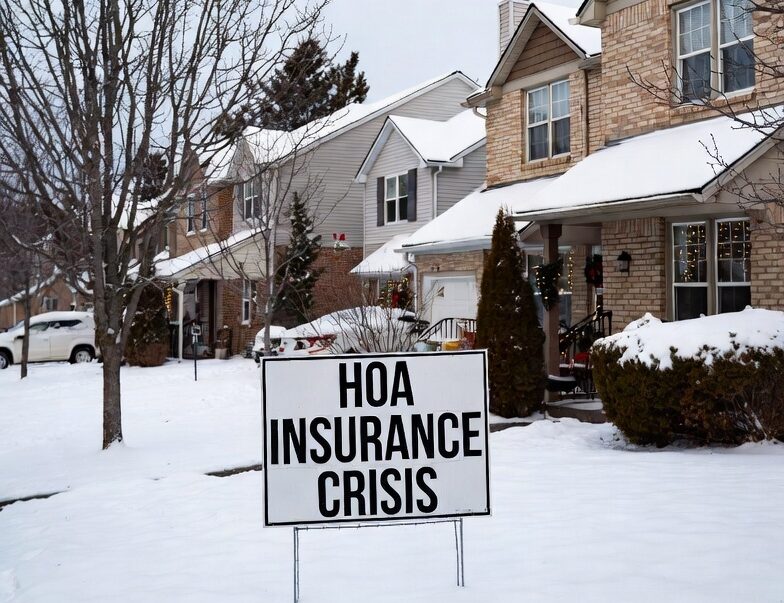
An article from Realtor.com recently discussed what to look for in a property that could potentially make it uninsurable. As properties age, it’s become a thing in the risk-averse world of insurance. Just a few decades ago it seemed everything was insurable. That has certainly changed, right down to a home that has a roof that is only 20 years old. God forbid if your HOA has hail damage. It seems the insurance companies want to run for the hills as fast as they used to sign policies.
What are now some big issues in homes that lead to uninsurability?
First, says the article, foundation cracks.
Horizontal cracks and uneven floors indicate movement within the foundation and structure of the property. According to Rhodes, such risks lead insurers to quote much higher premiums or even deny coverage altogether.
Such damage can be a poisoned pill for insurance companies, or could lead to much higher premiums to insure the property.
Next, flood and fire risk.
The Federal Emergency Management Agency assigns every property to a risk category, and those in flood zones A and AE are subject to distinct requirements under the National Flood Insurance Program.
An HOA in a flood zone is rare in these parts, but properties that are zoned according are likely to see much higher premiums, adding to those ever-increasing monthly HOA fees that include insurance. Some states are also facing uninsurable properties that are near wooded areas due to fire risk. States like California, Colorado and Washington are under the microscope.
Homes in areas with dense forest, particularly with uncleared vegetation, have made homeowners insurance impossible to get. In fact, some insurance companies have stopped issuing policies in select states because wildfire-related claims have made them bankrupt.
Electrical infrastructure is also scrutinized. The article says that “homes with knob-and-tube electrical systems from the pre-1970 era are essentially uninsurable.”
And that roof?
Any roof that’s more than 20 years old is a red flag for almost every insurance company. Insurance companies require that an old roof be replaced before they will issue your policy. This means you will have to find an additional $12,000 to $28,000, or renegotiate the entire transaction.
The article also says that missing or deteriorated asphalt shingles are problematic, as they can result in moisture intrusion.
It’s always something. You can read the article HERE.