November 5, 2026 | Mark Luis Foster
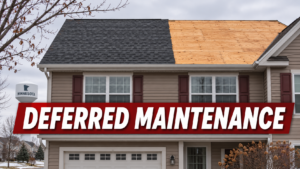
We always point out at our chapter meetings that deferred maintenance are two words an HOA board never should say together, as it’s really just another way of saying “we are kicking the can down the road and making things worse.” As board leaders, we want to ensure we are maintaining our properties and, hopefully, living by the reserve study findings that point out critical maintenance repair.
Let’s discuss a scenario on those dirty words. Let’s say a homeowner repeatedly reports a leaking roof to their HOA board. The board acknowledges the problem but postpones repairs because the association is short on money or doesn’t want to spend it. Months later, water penetrates the building, damaging drywall, insulation, flooring and personal property inside several townhomes.
The original roof repair might have cost $10,000. Now — the association faces significantly greater expenses, possible insurance complications and angry homeowners. This happens more than you think.
Who is responsible for the additional damage?
Minnesota’s Common Interest Ownership Act (MCIOA) addresses this question, and legislation enacted in 2026 clarifies how maintenance-related damage responsibility applies to certain associations.
Minnesota Statutes Section 515B.3-107 establishes the basic responsibilities for maintaining property within common-interest communities. Generally, unless the governing documents or other applicable statutory provisions establish different responsibilities:
- The association is responsible for maintaining, repairing and replacing common elements.
- Individual homeowners are responsible for maintaining, repairing and replacing their units.
- Responsibility for damage caused by an owner or association depends on the applicable law and circumstances.
Chapter 61, enacted in 2026, amended this statute to distinguish between communities created before August 1, 2017, and those created on or after that date.
For communities created on or after August 1, 2017, the law expressly includes damage resulting from a failure to maintain property or perform necessary repairs or replacements.
The amendment took effect August 1, 2026. This does not mean older associations have no responsibility for damage caused by neglected maintenance. Rather, the statutory wording differs, and responsibility must be evaluated under the applicable law and governing documents.
Why Deferred Maintenance Can Become Expensive
Consider several common situations in Minnesota associations.
Leaking roofs: An association postpones repairs to deteriorating shingles or flashing. Eventually, water damages the interiors of multiple units.
Drainage problems: Homeowners repeatedly report standing water near building foundations. The problem goes uncorrected, resulting in basement water intrusion.
Deteriorating siding: The board delays replacing damaged siding, allowing moisture to penetrate exterior walls and create additional structural problems.
In each situation, the question becomes whether someone responsible for maintaining the property failed to take necessary action and whether that failure caused the resulting damage.
Liability is not automatic. The facts, governing documents, insurance coverage and applicable statutes all matter.
Minnesota Already Requires Preventative Maintenance Planning
Another important provision of Section 515B.3-107 requires covered associations to prepare and approve a written preventative maintenance plan, maintenance schedule and maintenance budget for common elements. Associations must follow their approved preventative maintenance plans and make the plans and schedules available to homeowners.
These requirements existed before the 2026 amendment. Unfortunately, having a maintenance plan and actually following it can be two different things. A board may know that a roof requires replacement in three years but fail to budget adequately. Another association may repeatedly defer needed repairs because directors are reluctant to increase assessments.
Postponing maintenance doesn’t eliminate its cost. It can make the eventual problem substantially more expensive.
Five Steps HOA Boards Should Take
Volunteer board members can reduce maintenance-related risks by taking several practical steps.
- Review maintenance responsibilities. Understand which building components and common elements the association must maintain under its declaration.
- Follow the maintenance plan. Ensure scheduled inspections, repairs and replacements are completed and documented.
- Respond promptly to complaints. Investigate reported leaks, drainage problems and other conditions that could cause property damage.
- Budget realistically. Maintain appropriate operating funds and replacement reserves rather than repeatedly postponing essential work.
- Document decisions. Keep records of inspections, contractor recommendations, repair approvals and the reasons important projects are delayed.
Boards should also consult their insurance professionals and legal counsel when maintenance problems result in damage affecting multiple units.
Good Maintenance Is Good Governance
Minnesota HOA board members have a responsibility to protect community property and manage association finances prudently.
That doesn’t mean every repair must happen immediately or that associations are automatically liable whenever something breaks.
But repeatedly ignoring a known problem can expose the association and homeowners to avoidable damage, financial losses and disputes.
The lesson for Minnesota HOA leaders is straightforward: Preventative maintenance isn’t simply about keeping buildings looking good. It’s about protecting homeowners, preserving property values and reducing financial risk.
The 2026 statutory clarification provides another reason for boards to make maintenance planning a priority.
Learn more on SF 1750: Visit the HOA Leadership Network Education Center for resources on Minnesota HOA governance and legislative developments.