August 8, 2026 | Mark Luis Foster
Last month I did a TV interview with a national news firm that packages stories for local news stations. The reporter focused her interview with me on HOAs’ roles in creating environmentally friendly and sustainable solutions for HOA properties. Not my area of expertise, but I decided to opine on the idea that board leaders may be energized by the idea of more sustainable areas of wild and natural grass growth and pollinator beds if they were aesthetically pleasing and cost efficient. I guess we may see my mug sometime on TV this fall to see if I made any sense whatsoever.
A fairly extensive article on the subject of HOA environmentalism was recently published by The Conversation, which calls itself “an independent and nonprofit source of news, analysis and commentary from academic experts.”
Their premise for the article was summed up this way:
HOAs are uniquely positioned to be leaders in residential sustainability. Unlike municipalities and townships, they govern at the scale where many environmental decisions are actually made: the household. Reasonable covenants requiring native plants, limiting turfgrass and encouraging renewable energy can produce positive changes in neighborhood landscapes. States can help by establishing guardrails that allow renewable energy, wildlife conservation and water-saving landscaping.
They went well beyond the scope of what my TV interview was about. The researchers seemed to be implicating HOAs for their strict covenants on construction, driveways, and other elements, while ignoring or “discouraging” environmentally friendly applications.
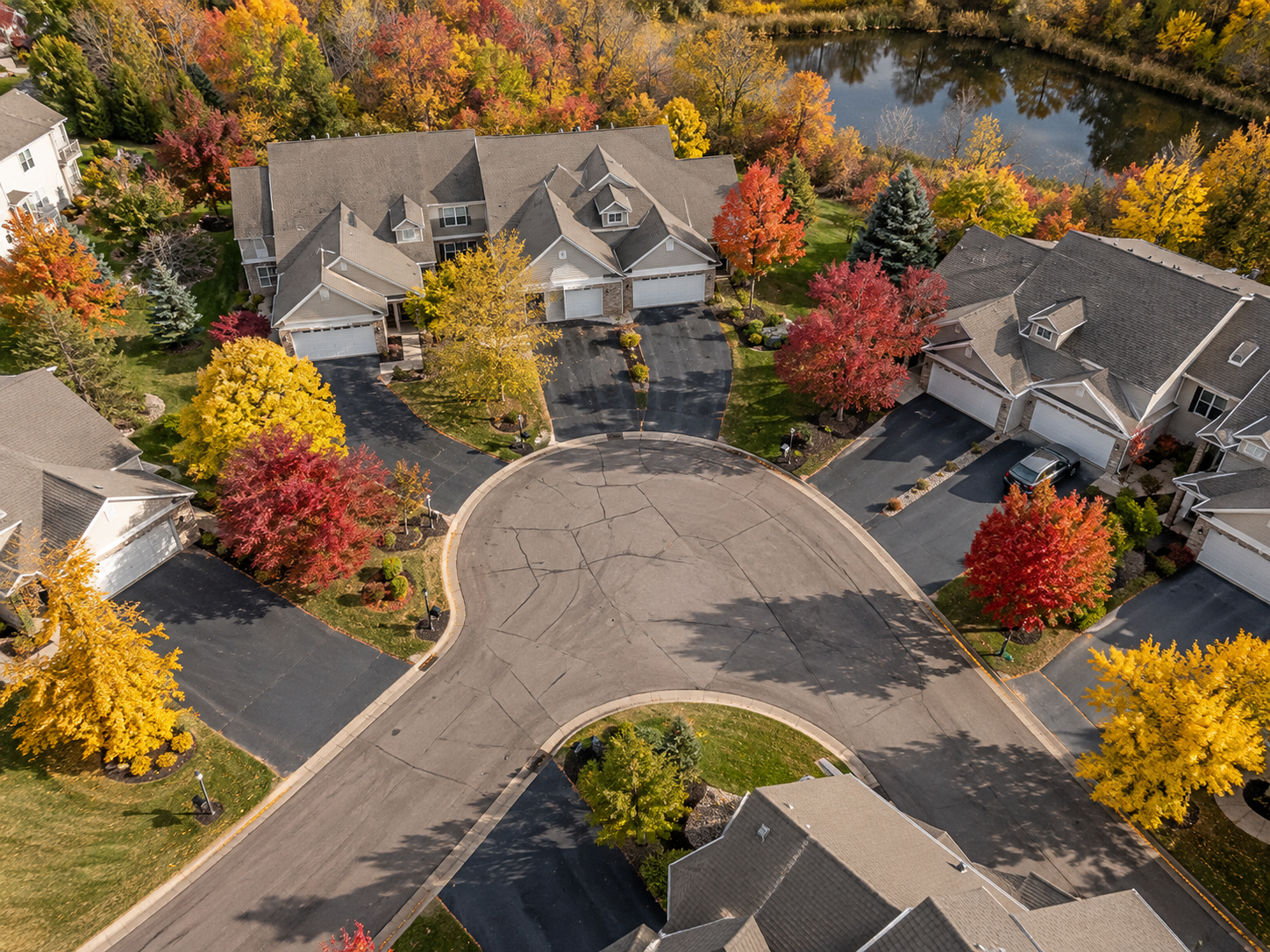
HOAs occupy a unique position between private property and local governments. They enforce rules, collect fees, assess fines and maintain shared spaces. They also often regulate house size, building materials, driveways, yards, trees, outdoor lighting and energy production.
So they kept looking.
We found comparatively few provisions that supported sustainability. Only 29% of the HOAs limited outdoor-light wattage, 19% required residents to maintain trees, 6% constrained use of fertilizers and 3% required native plants. In short, we found HOA provisions that impeded sustainable choices were much more common than provisions encouraging them.
I’ll say again what I told the TV reporter: HOAs are efficient and popular due to uniformity and “bulk applications” of services. For example, it’s cheaper and aesthetically acceptable for all HOA lawns to be mowed the same way with little or no variations. Common areas might be a good start for the inclusion of natural and wild flowers, grasses and pollinator beds. Rain gardens can make a great deal of sense in some locations. Allowing households to decide that they want their lawn turned to natural grasses is likely to be unpopular among some neighbors in tightly controlled (and expensive) HOA properties.
And you’ll lose most HOA boards when you start arguing against fertilizers, tree insecticides, irrigation and weed treatment. If there are better, safer and more economical solutions, then I think board leaders will be all ears. There’s probably a fair amount of education needed among contractors, too. They make money by doing things efficiently, quickly and with great results. An argument for environmental friendly applications may not fly without solid education and a definition of probable outcomes.
Read the story on this NPR channel, HERE.