
November 9, 2026 | Mark Luis Foster
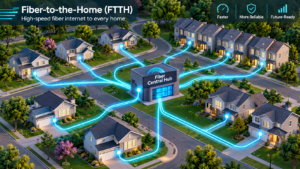 In our chapter meetings this month, Joe Berg of Mereo Fiber (www.mereofiber.com) has been talking about and presenting on fiber expansion and how things are quickly changing in the infrastructure world. All around us, front yards are being ripped up as fiber conduits are being installed. Across Minnesota, telecommunications companies are investing heavily in fiber-optic networks, bringing faster internet speeds and improved connectivity to residential neighborhoods.
In communities throughout the Twin Cities, construction crews are installing these new underground fiber lines, often replacing older internet infrastructure with technology capable of delivering dramatically faster service. But there’s a potential problem for homeowner associations, particularly townhome and condominium communities with private roads and common property.
While fiber companies may be installing new infrastructure along public streets, nearby HOA communities could miss out unless their boards take action.
Why Fiber-to-the-Home Should Not Be Ignored
Fiber-to-the-home (FTTH) uses fiber-optic cables to deliver internet service directly to individual residences. Unlike traditional cable or telephone-based connections, fiber networks can provide extremely fast download and upload speeds, often reaching one gigabit per second or more.
For homeowners, that can mean better performance for:
- Streaming television and entertainment.
- Working remotely and participating in video meetings.
- Telehealth appointments and online education.
- Home security systems and smart-home technology.
- Supporting multiple connected devices simultaneously.
Reliable, high-speed internet has become an increasingly important household utility. Having access to modern broadband infrastructure can also make a community more attractive to prospective buyers. The issue is: If HOAs don’t take charge to become part of this trend, residents are going to be asking their boards “why.”
The Private Property Problem
Many Minnesota townhome and condominium associations own and maintain their streets, driveways and common areas. That creates a different situation from neighborhoods where utilities can install infrastructure within public rights-of-way.
When a fiber provider expands into a city, it may be able to install cables along public streets using established utility rights. However, extending those cables into an HOA community with private roads or shared property can require additional easements, access agreements or other legal authorization.
Providers may need permission to install underground cables, access boxes, conduits and connections to individual buildings. Existing utility easements or statutory rights may already authorize some installations, so separate board approval is not always necessary. But when additional access is required, someone with appropriate authority must address it.
If an association has not established that authority or contacted providers, extending service into the community may be delayed or overlooked during construction planning.
What Should HOA Boards Do?
Rather than waiting for individual residents to discover they cannot obtain fiber service, HOA boards should consider taking a proactive approach.
1. Identify nearby fiber providers. Contact telecommunications companies currently installing or planning fiber networks in your city. If you’re attending our chapters in November, Joe Berg of Mereo Fiber is a great resource to learn more.
2. Determine the association’s property rights. Review plats, utility easements, private-road ownership and common-area responsibilities.
3. Contact providers about installation. Ask whether the community is included in future service plans and whether association authorization is needed.
4. Discuss installation requirements. Understand where cables, conduits and equipment would be installed, whether trenching is required, and who will restore disturbed landscaping, irrigation systems and pavement.
5. Evaluate agreements carefully. Review installation costs, ongoing responsibilities, access rights and any provisions affecting homeowners’ freedom to choose internet providers.
6. Keep homeowners informed. Explain proposed work, construction schedules and how residents can request service when it becomes available.
Associations should seek appropriate legal review before granting permanent easements or signing significant access agreements.
Don’t Assume Fiber Will Arrive Automatically
One of the biggest mistakes an HOA board can make is assuming that because fiber is being installed in the surrounding neighborhood, its community will automatically receive the same service. That may not happen.
Providers must evaluate construction costs, available infrastructure, legal access and customer demand before extending their networks. An association with 50, 100 or 200 homes may represent an attractive opportunity for a fiber provider, especially when the board can coordinate access and communicate homeowner interest.
But that opportunity may never be fully evaluated unless someone initiates the conversation.
An Investment in Your Community’s Future
HOA boards routinely plan for roofs, siding, pavement, landscaping and other infrastructure. Broadband connectivity deserves consideration as part of that long-term planning. I always refer to internet services as “a utility.” It is just as crucial now as water, gas, and electricity. Why not treat it as such?
Fiber installation may provide residents with faster service, more provider choices and greater flexibility as household technology continues to evolve.
For Minnesota HOA leaders, the message is simple:
Don’t wait until fiber installation crews have finished working in your neighborhood to ask whether your association can be included.